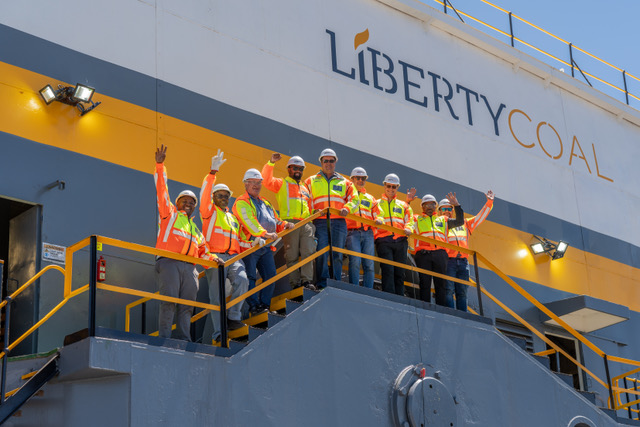
MIDDELBURG – Liberty Coal is investing more than R1 billion in the first phase of Liberty Green Park, a multi-phase project aimed at repurposing 38 000 hectares of land at Optimum Colliery for renewable energy, agriculture, water treatment and green hydrogen while coal mining continues.
The plan follows Liberty Coal’s R3 billion investment to recapitalise and operationalise Optimum after its acquisition. The company stressed that the investment is separate from the Green Park project.
“At Liberty Coal, we believe that the true legacy of mining is measured not only by what we extract from the ground, but by the lasting value we create for people, communities and future generations,” said Victoria Ndyamba, Head of Water Infrastructure and Energy at Liberty Coal, commenting on behalf of the company. “The required investments for the Liberty Green Park are separate from the R3 billion.”
Because not all initiatives have been fully scoped, the total cost of the Green Park project cannot yet be determined. However, Ndyamba confirmed that the first phase, focused on renewable energy, is estimated at approximately R1 billion.
The first phase will focus on solar energy, with other components to follow. It will involve a 50MW solar PV plant currently in the feasibility stage. According to Ndyamba, construction is anticipated to begin in the second quarter of 2027 and is expected to be completed by the first quarter of 2028.
Liberty Coal plans to scale its solar capacity to 500MW over time. Power generated will be wheeled through the Eskom grid, while the company is in negotiations for power purchase agreements, including “promising engagements with the likes of Eskom Green,” Ndyamba said.
There are no firm timelines yet for the other three pillars: clean water, sustainable agriculture and green hydrogen. All will be developed on rehabilitated mine land.
On agriculture, Liberty Coal plans to grow hemp on 5 000 hectares, starting with 200 hectares. The crop will be planted on land where coal has already been mined and the land restored to a vegetative state. Ndyamba said hemp’s phytoremediation properties would further improve soil quality. At full production, hemp farming alone could employ more than 200 people. Partners have not yet been disclosed.
The water component centres on refurbishing the Optimum Water Reclamation Plant. Once upgraded, it will treat mine-affected water to drinking-water standards. Some of the treated water will be discharged into freshwater streams around the mine, forming what Ndyamba described as “the anchor on which the Green Park is being established.”
Optimum still has more than 20 years of coal mining left and currently employs about 2 000 people. Liberty Coal said Green Park is not about replacing those jobs, but transferring skills into new industries.
“Our strategy is a people-first Just Transition strategy,” she said. “We are not aiming to replace coal jobs, but rather to transfer the skills, experience and institutional knowledge of our coal workforce to sustainable industries.”
Ndyamba said electrical maintenance staff could transition to the solar plant, heavy machinery operators could work on construction, while pumping specialists would be needed for bulk water supply.
The scale of the project will also require a wide supplier base, creating opportunities for local SMMEs. Beyond direct jobs, Ndyamba said the project is designed to “create long-term economic value and maximise the value of existing resources for sustainable use by residents and local businesses” in Middelburg and surrounding communities.
The site historically supplied coal to Hendrina Power Station. Environmental restoration is central to Green Park, with all initiatives planned for rehabilitated land. Hemp will help remediate soils, while treated mine water will reduce the mine’s impact on local catchments.
“We are not only repurposing the land at Optimum Colliery, but we are also repurposing the economic potential of the mine which includes its people as well,” Ndyamba said.
With solar construction targeted for 2027 and other elements still being scoped, the company plans to have all four areas operational by 2031. For now, the R1 billion renewable energy phase provides the clearest indication of what comes next for Optimum.