DELMAS — After years of water shortages, residents of Brakfontein are hopeful that a new borehole and water storage project will bring relief to households that have sometimes waited for longer period for municipal water tankers.
For years, residents have struggled to access reliable water supplies, with some forced to buy water at the expense of other basic necessities when municipal deliveries failed.
“When we have money, we buy it; we sleep hungry,” said resident Johannes Mofokeng, describing the sacrifices households have made to access water.
Mofokeng said residents had complained about the shortages for years, while children often helped their families collect water.
He welcomed the municipality's intervention, saying: “I thank the municipality very much for what they did.”
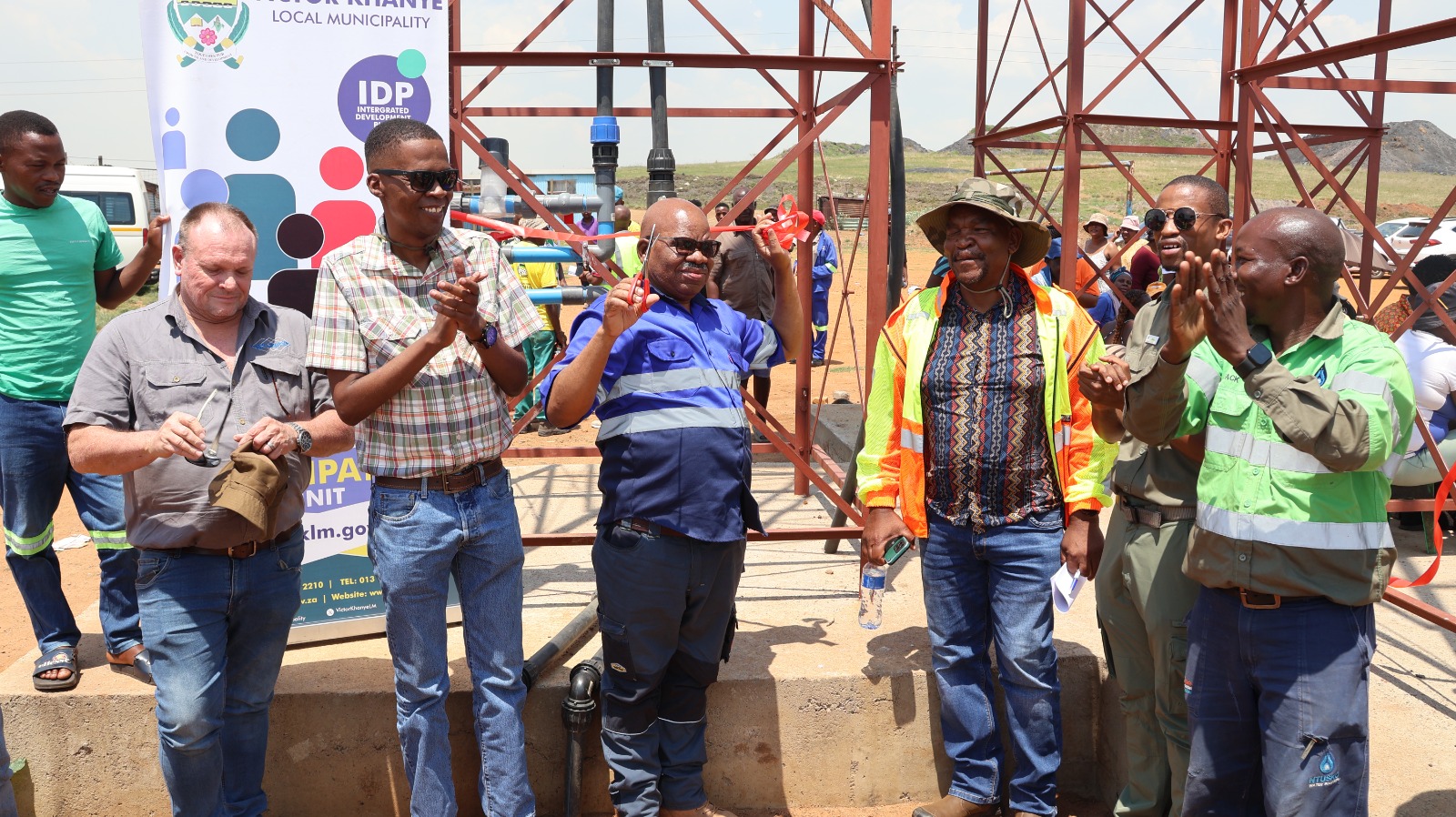
Victor Khanye Local Municipality (VKLM), led by Executive Mayor Vusi Buda, has handed over a water infrastructure project involving boreholes and an elevated steel water tank in Brakfontein.
Implemented by contractor Ntusko Water Solutions, the project forms part of a broader municipal water infrastructure initiative and is expected to benefit more than 280 households while creating 20 job opportunities.
The project has also been extended to Groenfontein, where residents now have access to a reliable water supply.
Addressing residents during the handover, Buda said the municipality had drilled two boreholes and installed storage tanks to improve water access in Brakfontein and surrounding areas.
He urged residents to protect the infrastructure against vandalism and use it responsibly.
He added that more water taps would be installed using the remaining project funds to increase the number of existing collection points. The funds would also be used to fence off the water reservoirs to ensure children's safety.
Jabulani Buthelezi, VKLM's assistant manager in the Project Management Unit, said the municipality had invested in boreholes partly to reduce its dependence on water tankers.
He explained that Brakfontein was approximately 21km from the municipality's main operations, making water deliveries vulnerable to delays when tankers broke down.
Although the municipality had planned to send two water tankers to the area each week, Buthelezi acknowledged that this was insufficient to meet residents' needs.
The project was implemented in phases, including borehole drilling, pump installation, connections to storage tanks, standpipe construction and electricity provision.
Reliable supply remains the test
Despite the new infrastructure, the project's success will depend on whether it can consistently provide enough safe water to meet residents' needs.
Buthelezi said two boreholes had been installed in Brakfontein as part of the municipal intervention.
He also referred to a separate borehole drilled through a Rand Water assistance programme, which had been vandalised and subsequently re-equipped.
However, an unresolved electricity connection was preventing the borehole from operating again.
The municipality also faces water supply challenges in Klipfontein, where existing boreholes recharge slowly and struggle to meet demand.
Buthelezi said additional boreholes investigated in the area had not yielded sufficient water, prompting the municipality to consider alternative sources, including a nearby dam.
For Brakfontein residents, the real test will be whether the new infrastructure delivers a reliable supply of safe water and reduces their dependence on municipal tankers and privately purchased water.