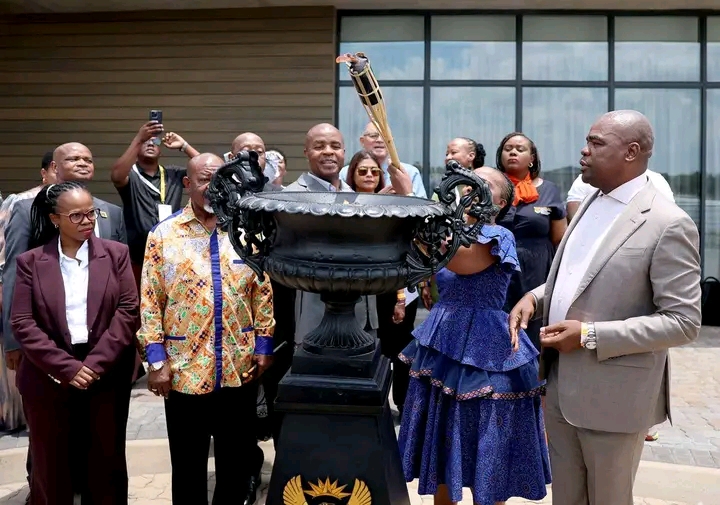
MIDDELBURG – The 2026 national campaign for the 16 Days of Activism for No Violence Against Women and Children was officially launched in Middelburg on Friday, 20 November 2026, with government leaders calling for stronger action against gender-based violence and femicide (GBVF).
Deputy President Paul Mashatile delivered the keynote address virtually on behalf of President Cyril Ramaphosa during the launch hosted by the Mpumalanga Provincial Government, Nkangala District Municipality and Steve Tshwete Local Municipality at the Destiny Exclusive Hotel and Conference Centre.
“Mpumalanga is not merely the host of today’s event. It is a vital part of the national effort that must carry the commitments we make here into homes, schools, streets, workplaces, farms, mines, and communities,” Mashatile said.
Mpumalanga Premier Mandla Ndlovu welcomed the national launch and reflected on the province's efforts to address GBVF.
He recalled asking at the 2024 launch whether existing laws and programmes were making a difference. Two years later, he said the question remained unanswered and had become even more urgent.
Ndlovu referred to the killings of mothers and children in September, which left families living in fear.
“As a father, I understand that fear that when children leave for work or school or to go for a morning run, they might not return. Unfortunately, Mpumalanga has not been spared this pain,” he said.
Between January and March 2026, Mpumalanga recorded 900 sexual offences reported to police. Although the figure was lower than during the same period in 2025, Ndlovu said it remained unacceptable, particularly as many incidents go unreported.
He also raised concerns about pregnancies among girls aged 10 to 14, calling for criminal cases to be opened against those responsible.
Ndlovu linked GBVF to economic challenges facing women. In the second quarter of 2026, female unemployment in Mpumalanga stood at 40.1%, compared with 33.9% among men.
He said financial dependence often made it difficult for women to leave abusive relationships and encouraged young girls to pursue education, become financially independent and avoid relying on blessers for financial support.
The Premier also remembered Thembi Lukhele of Bethal, Goodness Mandlazi and Kedibone Sigudu of eMalahleni, expressing hope that their families would find healing.
“We must work together to ensure that the sun rises again for the women of South Africa!” he said.
The 2026 campaign is held under the theme, ‘Letsema: Men, Women, Boys and Girls working together to end Gender-Based Violence and Femicide’.
Mashatile said Letsema, a tradition of neighbours coming together to share work, should guide the country's response to GBVF.
“Violence against women and children is not a private family matter, and ending it cannot be left to survivors, women’s organisations, courts, or the police alone,” he said.
Referring to a study by the Human Sciences Research Council (HSRC), Mashatile said more than one in three adult women had experienced physical or sexual violence in their lifetime.
“Behind every number is a mother, a daughter, a sister, or a friend whose life, dignity, and future were ripped away in the very spaces where they should feel safest,” he said.
He warned that “promises on paper are no longer enough”, stressing that the fight against GBVF must continue throughout the year rather than being limited to the annual campaign from 25 November to 10 December.
Earlier that day, a new Thuthuzela Care Centre was officially opened at King Nyabela Hospital in Middelburg. The centre brings medical care, counselling and legal support together under one roof for survivors of violence.
Mashatile also announced that the Department of Women, Youth and Persons with Disabilities had been allocated an additional R157.4 million over the medium term to strengthen coordination of the national GBVF response.
He outlined four key interventions, including a National Case-Recovery Operation, clearing forensic backlogs, conducting Women's Safety Audits in every municipality and addressing alcohol-related violence.
However, progress in implementing the National Strategic Plan on GBVF remains a concern.
Of the 191 indicators assessed, only 65 had been achieved, while 104 were still in progress and 22 had not been met. Only six of the 42 targets relating to prevention and social cohesion had been achieved.
Mashatile said these figures showed the need to move beyond commitments and focus on practical action that would make communities safer.
“To anyone enduring abuse today, hear this clearly: you are not invisible, your story is not over, and you still hold the power to reclaim your life and your future. We stand with you,” he said.