DELMAS – Four people are set to begin their journey to recovery after they were identified for rehabilitation during the Nkangala In-Patient Treatment Centre Roadshow, held at Shamoya in Botleng Extension 3 under the “Sibalande” campaign.
The campaign aimed to raise awareness about substance abuse treatment, educate communities about available services and link people struggling with addiction to professional rehabilitation.
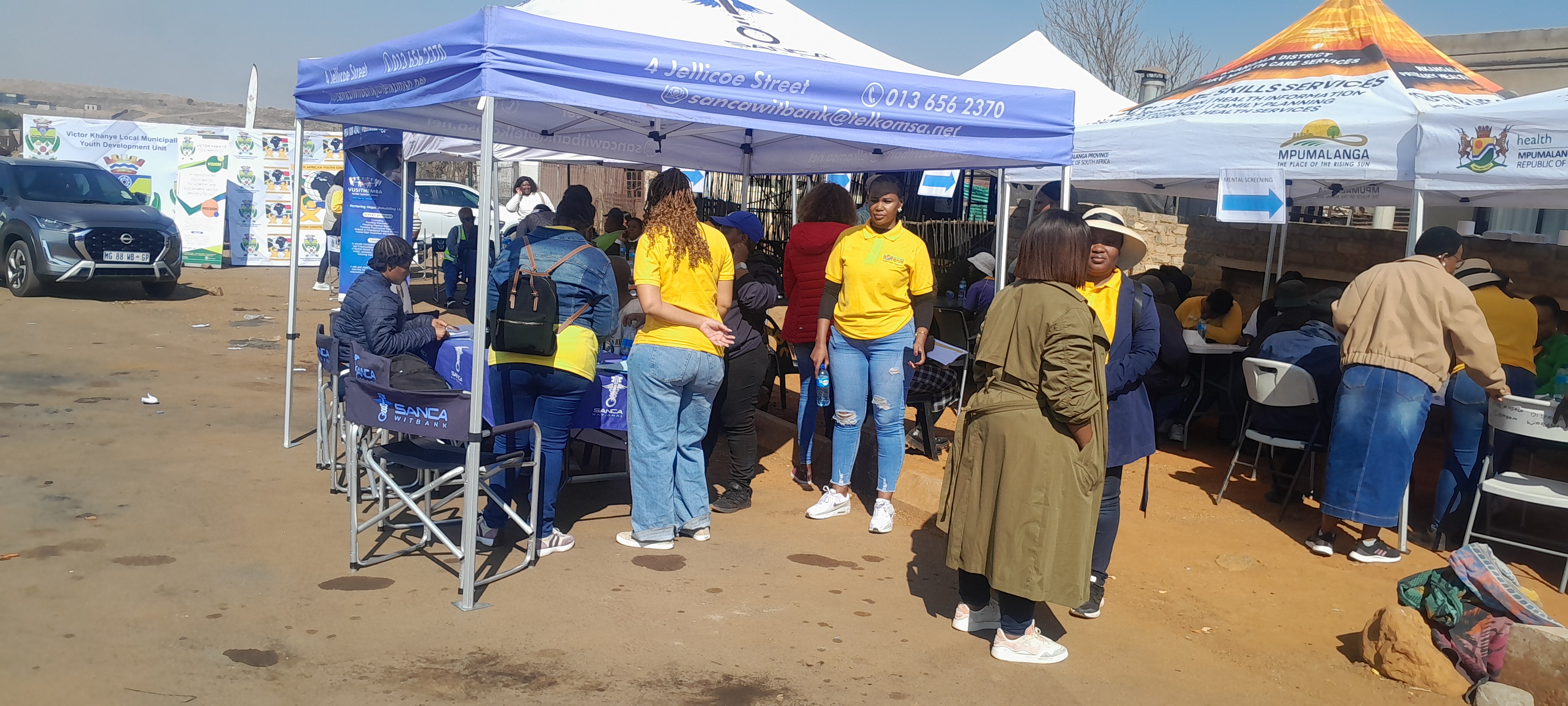
The outreach brought together the Nkangala In-Patient Treatment Centre, Mpumalanga Department of Social Development, Department of Health, Victor Khanye Local Municipality, South African Youth Council (SAYC), Phemphetse Training Academy, Vusithemba Victim Support, the Victor Khanye Local Drug Action Committee (LDAC), the Mpumalanga Substance Abuse Forum, SANCA, community leaders and residents.
The Department of Health conducted medical and mental health screenings, while social workers and SANCA officials assessed prospective service users to determine their physical condition, mental wellbeing and readiness for treatment.
Victor Khanye Local Drug Action Committee Chairperson Tumelo Rashokeng said the campaign aimed to promote the Nkangala In-Patient Treatment Centre and encourage people battling addiction to seek professional help.
“We are here today to popularise the Nkangala In-Patient Treatment Centre under the slogan ‘Sabalanda’. We are here to fetch service users battling substance abuse and connect them with treatment. Victor Khanye continues to experience high levels of crystal meth, nyaope, rock and alcohol abuse,” Rashokeng said.
Mpumalanga Substance Abuse Forum Chairperson Marcus Masemola said the forum was established in terms of the Prevention of and Treatment for Substance Abuse Act (Act 70 of 2008) to coordinate government departments, NGOs, NPOs and the private sector in the fight against substance abuse.
“Our vision is to build a Mpumalanga that is free from substance abuse. We cannot work in silos. We need all stakeholders to work together to ensure that people receive the help they need,” Masemola said.
He said the campaign also seeks to educate communities about registered rehabilitation facilities.
“There are unregistered rehabilitation centres charging families large amounts of money, yet people do not receive the help they need. We want communities to know that there is a registered government-funded rehabilitation facility, the Nkangala In-Patient Treatment Centre, that can assist people battling addiction.”
Masemola said stakeholders visited known drug-use hotspots to engage directly with substance users and encourage them to seek assistance.
“Today we went to the hotspots, spoke to people using drugs and took down their details. Our aim is to remove them from the streets and connect them with rehabilitation services.”
He explained that all prospective service users underwent screening by social workers, the Department of Health and SANCA to determine their readiness for rehabilitation.
“Not everyone who comes forward is immediately ready for rehabilitation. We first assess their state of readiness because successful recovery starts with a willingness to change.”
Following the multidisciplinary assessments, six people were identified for treatment.
“Four service users will first be admitted to Samuel Bernice Hospital for medical detoxification before being transferred to the Nkangala In-Patient Treatment Centre. Two women will undergo detoxification at KwaMhlanga Hospital before entering rehabilitation,” Masemola said.
Mpumalanga Department of Social Development Director of Communications Kanego Thete said the roadshows are intended to improve public awareness of and access to treatment services.
“The main objectives of the roadshows are to create awareness of the services that are provided by public inpatient treatment centres, educate the public on the process of admission to inpatient treatment centres and discourage communities from utilising unregistered treatment centres.”
He said the department hopes communities will make use of registered facilities where professional treatment is available.
“Communities will be able to utilise registered treatment centres and refrain from using unregistered facilities.”
Thete said the department remains committed to long-term interventions.
“The Department will continue to render prevention and awareness campaigns, treatment services for persons affected by substance use disorder, and aftercare services to ensure continuity of care.”
Among those seeking help was 22-year-old Nkosi Majola, who said he started using drugs in 2017 after experiencing abuse at home.“I started smoking in 2017 because I was physically abused by my uncle. I hoped all my problems would fade away. The community has always motivated me to stop smoking, and today my neighbour brought me here to get help. I am looking forward to getting help and changing my life,” Majola said. The roadshow concluded with stakeholders reaffirming their commitment to strengthening collaboration, preventing substance abuse and ensuring more people are linked to professional treatment, rehabilitation and aftercare services.