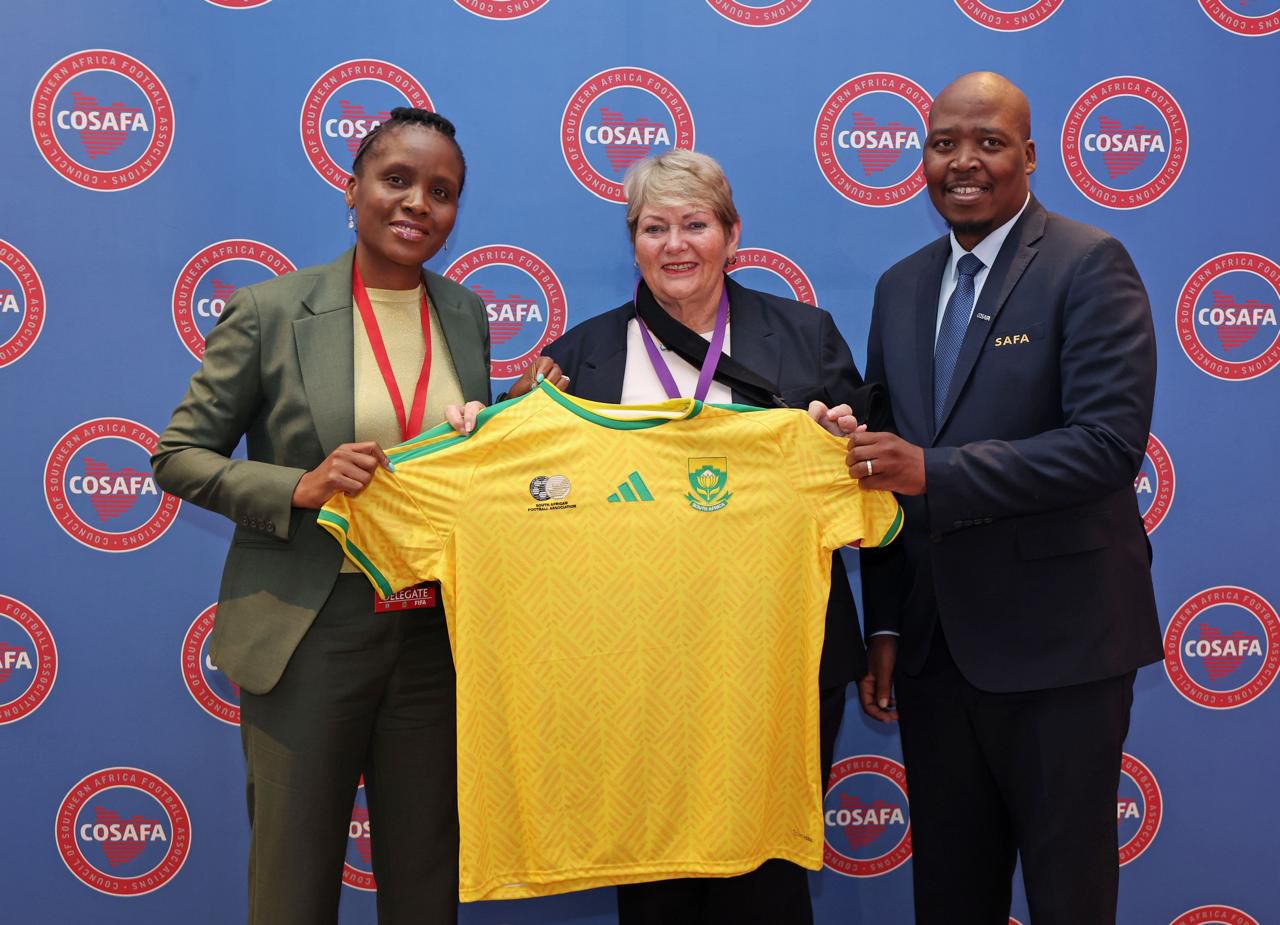
DELMAS — From the football structures of Mpumalanga to the leadership ranks of regional football, Linda Zwane says his appointment to the Council of Southern Africa Football Associations (COSAFA) Executive Committee presents an opportunity to open doors for young players across Southern Africa.
Zwane was co-opted onto the COSAFA Executive Committee during the organisation’s 2026 Elective General Assembly held in Harare, Zimbabwe, on 17 May 2026.
Speaking to the Highveld Chronicle, Zwane outlined a vision focused on football development, strengthening regional competitions and creating opportunities for young talent.
Zwane, who also serves as Vice-President of the South African Football Association (SAFA) and President of the Mpumalanga Sport Confederation, said the role gives him an opportunity to help shape football development across COSAFA’s 14 member nations.
“As a member of the COSAFA Executive Committee, my responsibility is to contribute to the collective governance, strategic oversight and policy formulation for football across our member nations,” said Zwane.
He said one of his priorities would be strengthening regional competitions and ensuring football structures across member countries benefit from commercial growth and development opportunities.
“COSAFA must become an enabler of football development, not just a regulator,” he said.
Zwane said his appointment could also create opportunities for football development in Mpumalanga and South Africa through increased regional exposure and investment.
“Leadership is about creating pipelines. By sitting at the regional table, I intend to bridge the gap between local talent and international exposure,” he said.
He added that he would advocate for regional tournaments, coaching clinics and scouting programmes to be hosted in South Africa, while encouraging cross-border football development initiatives.
Zwane identified poor infrastructure, financial instability and weak youth development systems as some of the biggest challenges facing football in Southern Africa.
“Too many talented players slip through the cracks because we lack uniform scouting and academy structures across the zone,” he said.
On grassroots football, Zwane stressed the need for improved scouting and coaching systems in rural communities.
“Talent is not confined to major cities,” he said.
Zwane also highlighted the importance of growing women’s football through expanded competitions and leadership opportunities.
“Women’s football is the fastest-growing sector of the sport, but it needs structural equity, not just lip service,” he said.
He said transparency would remain critical in attracting investment into football structures.
“Trust is our ultimate currency. To attract major corporate backing, we must operate with absolute transparency through independent auditing, compliance and long-term strategic planning,” he said.
Zwane also called for stronger cooperation among Southern African football associations to improve competitiveness and attract sponsors.
“By cooperating regionally, whether through shared officiating standards or future regional club competitions, we create a larger economic footprint that attracts broadcasters and sponsors,” he said.
Despite his multiple leadership responsibilities within SAFA, the Mpumalanga Sport Confederation and COSAFA, Zwane said the roles complement one another and all focus on football development.
Speaking about the legacy he hopes to leave behind, Zwane said he wants football to become more accessible to young people across Southern Africa.
“I want my legacy to be measured by the accessibility of the game, knowing that during my tenure we built a transparent pathway that allows a young boy or girl from any corner of Southern Africa to realise their dreams through football,” he said.
The Mpumalanga Sport Confederation and Mpumalanga MEC for Culture, Sport and Recreation, Leah Mabuza, both welcomed Zwane’s appointment, describing it as an important moment for football in the province and the broader Southern African region.