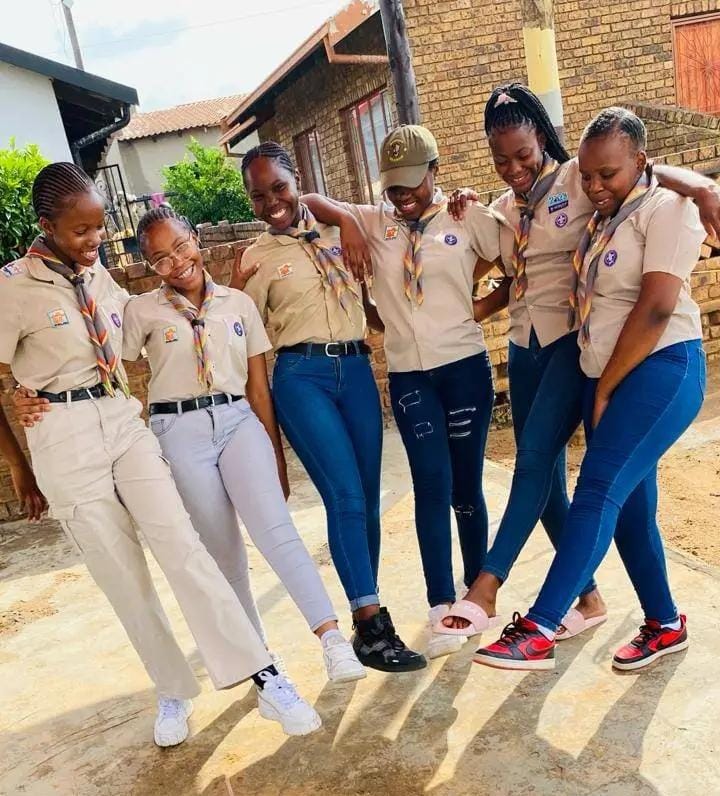
EMALAHLENI — In KwaGuqa, a group of children gathers after school, forming small teams as they prepare for the day’s activities. Some practise first aid while others plan community clean-up campaigns. Leading them is not a teacher, but a young Scout giving instructions with quiet confidence.
This is the kind of transformation that Thulane Khoza, district commissioner of the 1st and 2nd Passau Scout Group, says the programme is working to achieve — turning uncertain young people into leaders within their own communities.
“In our community, many young people don’t have access to safe spaces or strong role models,” Khoza said. “Scouting gives them that space. It teaches them discipline, leadership and respect, while also allowing them to have fun and discover who they are.”
The Passau Scout Groups operate in eMalahleni under SCOUTS South Africa, with activities hosted at local venues including KwaGuqa Primary School, Christian Faith Church and Blessing Children.
By keeping programmes within the community, the organisation removes barriers to participation.
“We want Scouting to be where the young people are,” Khoza explained. “By meeting in their communities, we make it easier for them to be involved and feel that they belong.”
Founded locally in 2003, the groups form part of a global Scouting movement that dates back more than a century. In eMalahleni, however, the focus is on addressing present-day social challenges while developing responsible young leaders.
At the centre of the programme is a method focused on practical learning and participation.
“We don’t just teach values, we give young people the opportunity to live them. They learn by doing, by leading and by serving others,” Khoza said.
Weekly meetings combine practical skills with structured group activities. Members are divided according to age groups, with Cubs focusing on teamwork and basic activities, Scouts taking on leadership responsibilities and skills development, while Rovers mentor younger members and lead community projects.
A typical week in Scouting blends fun with purpose, with each activity designed to prepare young people for real-life situations.
Members are taught:
● Leadership and teamwork
● First aid and emergency response
● Navigation and survival skills
● Communication and planning
The programme is further structured according to different age groups.
Cubs, aged between seven and 10, focus on teamwork, crafts, basic skills and service projects such as making toys for charity.
Scouts, aged 11 to 17, take on more responsibility through leadership roles, camps and specialised badges in areas such as survival and astronomy.
Rovers, between the ages of 18 and 30, focus on community projects while mentoring younger Scouts and guiding them through their journey.
“Each stage builds on the last. By the time they’re older, they’re not just participants, they’re leaders,” Khoza said.
Outdoor experiences remain one of the most impactful aspects of the programme.
“When young people are out in nature, away from distractions, they learn to rely on themselves and each other,” Khoza added. “That’s where confidence is built.”
The impact of the programme can already be seen through the growth of individual members. Some young people who joined with little confidence now take on leadership roles within their groups and coordinate initiatives such as recycling projects in their communities.
“We’ve seen young people completely transform,” Khoza said. “Some come in shy and unsure, and within a few years, they are leading, speaking confidently and making a difference in their community.”
Community service remains central to the group’s activities.
“Service is at the heart of what we do,” Khoza said. “We want our Scouts to understand that leadership is about giving back.”
The group continues to be guided by its principle: “Try and leave this world a little better than you found it.”
Despite facing challenges, including limited resources, the group continues to grow through commitment and community support.
“We may not always have everything we need, but we make a plan,” Khoza said. “What matters is that we keep showing up for these young people.”
Safety also remains a priority, with trained leaders ensuring all activities meet national standards.
The group is now planning to expand by partnering with more schools and introducing a Meerkat section for younger children.
“Our goal is to reach more young people,” Khoza explained. “If we can guide even more youth towards positive choices, then we know we’re making a difference.”
In eMalahleni, the work continues through regular meetings, community involvement and a commitment to developing young people into responsible members of society.