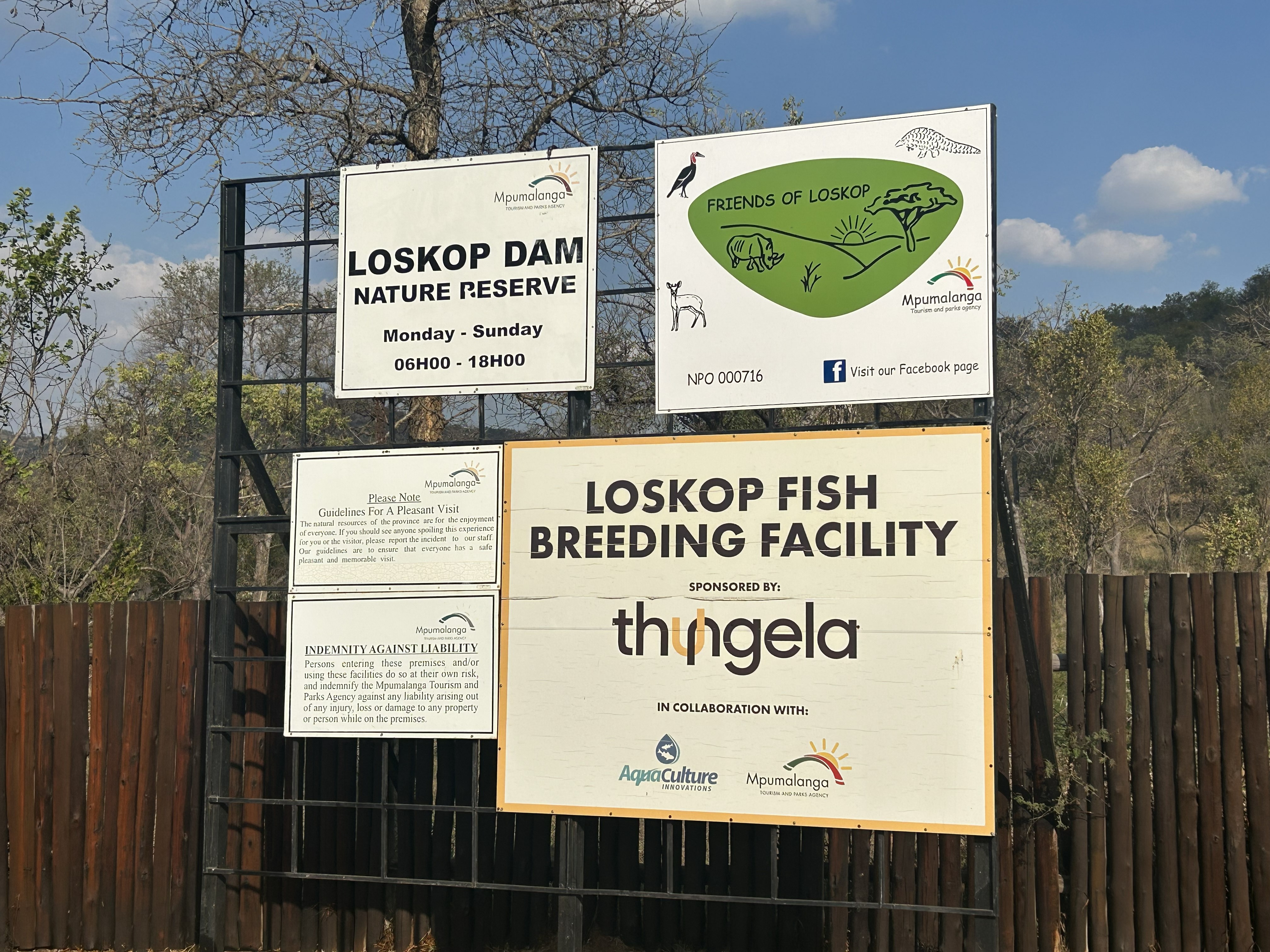
MIDDELBURG – The Portfolio Committee on Economic Development and Tourism has requested additional information from the Mpumalanga Tourism and Parks Agency (MTPA) after raising concerns over gaps in its report on Loskop Dam Nature Reserve.
During an oversight visit to the reserve on Thursday, 25 June 2026, committee members said the report lacked critical information needed to properly assess one of Mpumalanga's key tourism assets. The committee has given the Department of Economic Development and Tourism and the MTPA seven days to submit written responses and an updated report.
Committee member Trudie Grové-Morgan raised concerns over the reserve's unproclaimed land, warning that it could pose future legal challenges.
"This is the first thing that needs to be resolved. If the land is not proclaimed for the reserve, it can bring us problems at the end of the day," she said.
Committee Chairperson Lucky Mbuyane, supported by committee members Steven Sekoakoa and George Lukhele, questioned MTPA officials on several shortcomings in the report, including the absence of detailed marketing plans, tourism development strategies, expenditure reports and operational information.
MTPA Acting Chief Executive Officer Lemmy Mdluli acknowledged that budget constraints had affected marketing efforts but said the agency continued promoting the reserve through events such as the Loskop Marathon.
"We do participate and put resources into ensuring runners come and experience what we offer here," he said.
The committee also requested a monthly expenditure breakdown and details of the 25-year Memorandum of Agreement with WeWild Africa, formerly the Aspinall Foundation, signed in February 2024 to unlock R120 million in investment. Mdluli said the full agreement would be submitted to the committee.
Members further instructed the agency to conduct and submit a comprehensive game census detailing wildlife numbers across the reserve.
Executive Manager for Biodiversity Conservation Nomcebo Kunene agreed that the census was essential for effective wildlife management.
The committee also raised concerns over strained relations between MTPA and the Mmamarumo, Dindela and Rampholodi Community Property Associations (CPAs), which have land claims covering about 23.98% of the reserve.
Mdluli said the agency had recently held a three-day workshop with the CPAs and was working to rebuild relationships with the communities and WeWild Africa.
Responding to concerns raised by committee member George Lukhele over the use of Afrikaans property names in the report, Kunene explained that the names originated from the original farm portions and existing land claims.
Beyond the report itself, committee members questioned MTPA on several operational challenges.
These included a 61.76% vacancy rate, deteriorating infrastructure at the main entrance, staff accommodation and other facilities, poor network coverage affecting visitor safety and the recent killing of two rhinos, ending eight years without a poaching incident.
Kunene said MTPA follows national dehorning protocols and confirmed that all 43 rhino horns are securely stored, microchipped and fully accounted for.
Mdluli added that the agency was already engaging service providers to improve network coverage across the reserve.
Committee members also criticised the absence of the Nkangala District Municipality and Steve Tshwete Local Municipality from the oversight visit despite the reserve falling within their jurisdiction.
Representatives of WeWild Africa told the committee that the organisation's R9.5 million investment was supporting improved security, water management and wildlife protection within the reserve.
Despite these interventions, the committee maintained that further information was required before it could fully assess the reserve's operations.
"Loskop Dam is a strategic economic contributor. We cannot manage what we don't measure, and we cannot attract tourists with incomplete plans," committee members said.
Loskop Dam Nature Reserve, situated about 55km north of Middelburg in the Olifants River Valley, is the third-largest reserve managed by the Mpumalanga Tourism and Parks Agency. Covering approximately 23 612 hectares, the reserve was established in 1942, four years after the completion of the Loskop Dam, which was built to support downstream irrigation. Today, it is one of Mpumalanga's leading nature-based tourism destinations, offering visitors game drives, boat cruises, hiking trails, 4x4 routes, birdwatching, watersports and renowned freshwater angling. The reserve is home to a rich diversity of wildlife, including giraffe, zebra, white rhino, wildebeest and numerous antelope species, while the annual Nashua Loskop Wild Challenge continues to attract thousands of athletes from across South Africa. The committee said strengthening governance, infrastructure and conservation at the reserve is essential to unlocking its full tourism and economic potential.


