MIDDELBURG — The Nkangala Economic Development Agency (NEDA) has resolved to move away from running projects similar to or parallel to Local Economic Development (LED) initiatives, and instead focus on “catalytic, high-impact” investments as it repositions itself as the district’s investment hub.
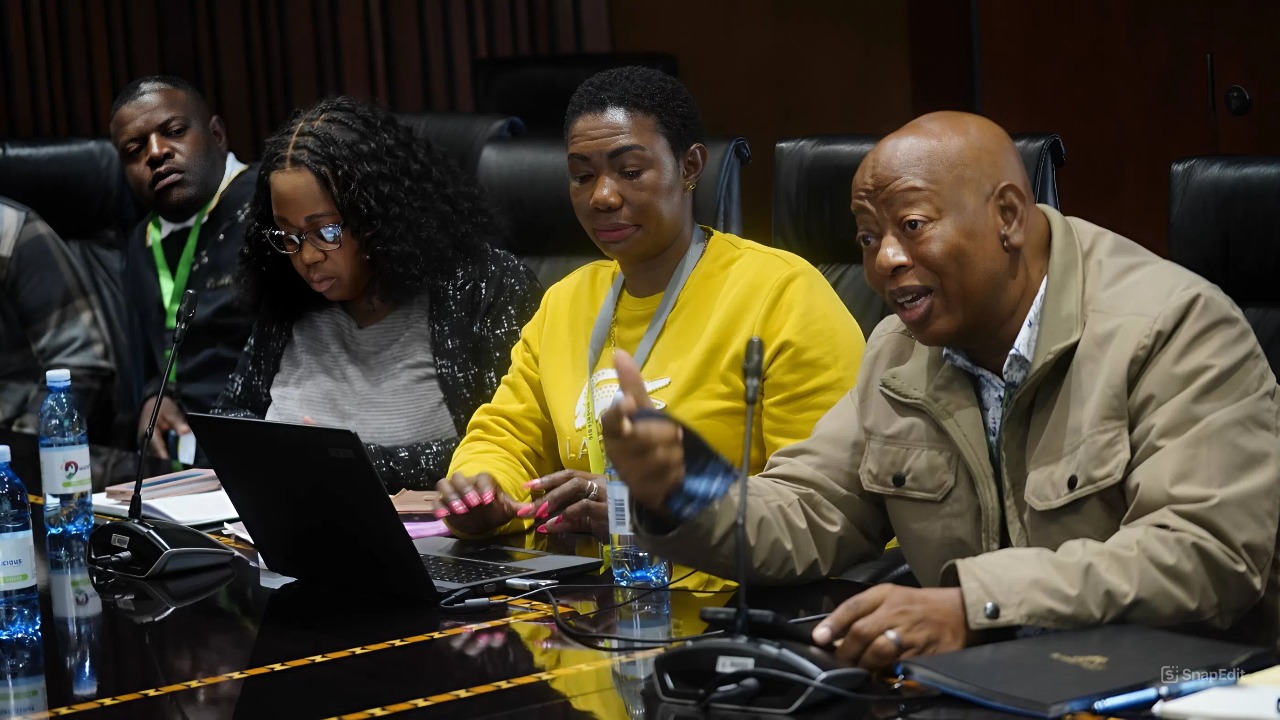
Acting CEO Prince Mangani announced the shift following a two-day strategic planning session held at Nkangala District Municipality in Middelburg on 23 and 24 April 2026.
“We are focusing on catalytic projects that have high impact. LED will be left to local municipalities in the district,” Mangani said.
LED is a municipal function aimed at creating an enabling environment for business, driving job creation and supporting small, micro and medium enterprises (SMMEs).
The decision means day-to-day LED functions, including SMME support, informal trader assistance and township economy projects, will remain to local municipalities, allowing NEDA to focus on attracting major investors and positioning Nkangala as an investment-ready district.
Mangani said the shift forms part of NEDA’s repositioning as a “comprehensive investment hub” for the district, with a strong focus on improving ease of doing business.
“In order to facilitate the ease of doing business, we should position ourselves as a one-stop investment centre for the district,” he said.
“We should be able to engage with any investor willing to invest within the region and assist them with approvals for businesses, land use, building plans and related processes so that we facilitate investment.”
The strategic session was attended by stakeholders including local business chambers, the South African Local Government Association (SALGA), the Presidential Climate Commission (PCC) led by Commissioner Ikosi Mahlangu, Mpumalanga Green Cluster Agency (MGCA), Tshwane Economic Development Agency (TEDA), LED officials from local municipalities, Mpumalanga Economic Growth Agency (MEGA), and the provincial Department of Economic Development and Tourism (DEDT).
Chief Economist Lennard van Vuren from DEDT presented an overview of the provincial economic landscape, noting that Nkangala records the highest unemployment among the three districts, while also being the largest contributor to the provincial economy at 38.4%. Academic institutions, including Nkangala TVET College and the Tshwane University of Technology, also outlined research and business opportunities available to the local business community.
Mangani highlighted two funded projects already under way: a brick manufacturing plant in eMakhazeni Local Municipality and a chemical manufacturing plant in Thembisile Hani Local Municipality.
He also outlined projects in the pipeline requiring investment, including a fire academy, a fresh produce market in Dr JS Moroka Local Municipality and a solar farm in Victor Khanye Local Municipality.
Mangani further revealed plans to establish a Technical and Vocational Education and Training (TVET) college in Victor Khanye, noting that Victor Khanye and Thembisile Hani are currently the only municipalities in Nkangala without TVET colleges.
“Our plan is that ultimately all Nkangala municipalities will have TVET colleges. There is land available, owned by the municipality. We just need an investor,” he said.
The session also resolved that NEDA will strengthen its institutional capacity, actively engage with business chambers, and assist municipalities in sourcing and accessing funding.
Mangani said engagements with potential investors and stakeholders would begin immediately.
Key Resolutions from the Session
· Leverage existing municipal assets such as land and infrastructure to support commercially viable and sustainable projects
· Develop and publish an investment prospectus to position the district as an attractive investment destination
· Strengthen institutional capacity through the establishment of a project preparation and investment function
· Source and facilitate grant funding on behalf of local municipalities
· Convert ideas into investable opportunities through feasibility studies, business case development and financial structuring
· Hold bi-monthly engagements with business stakeholders to refine the strategy
· Establish an investment book outlining infrastructure readiness, incentives and investment opportunities
· Explore establishing NEDA as a social housing institution
· Drive regional branding and investment promotion initiatives
· Undertake a learning visit to Tshwane Economic Development Agency (TEDA)