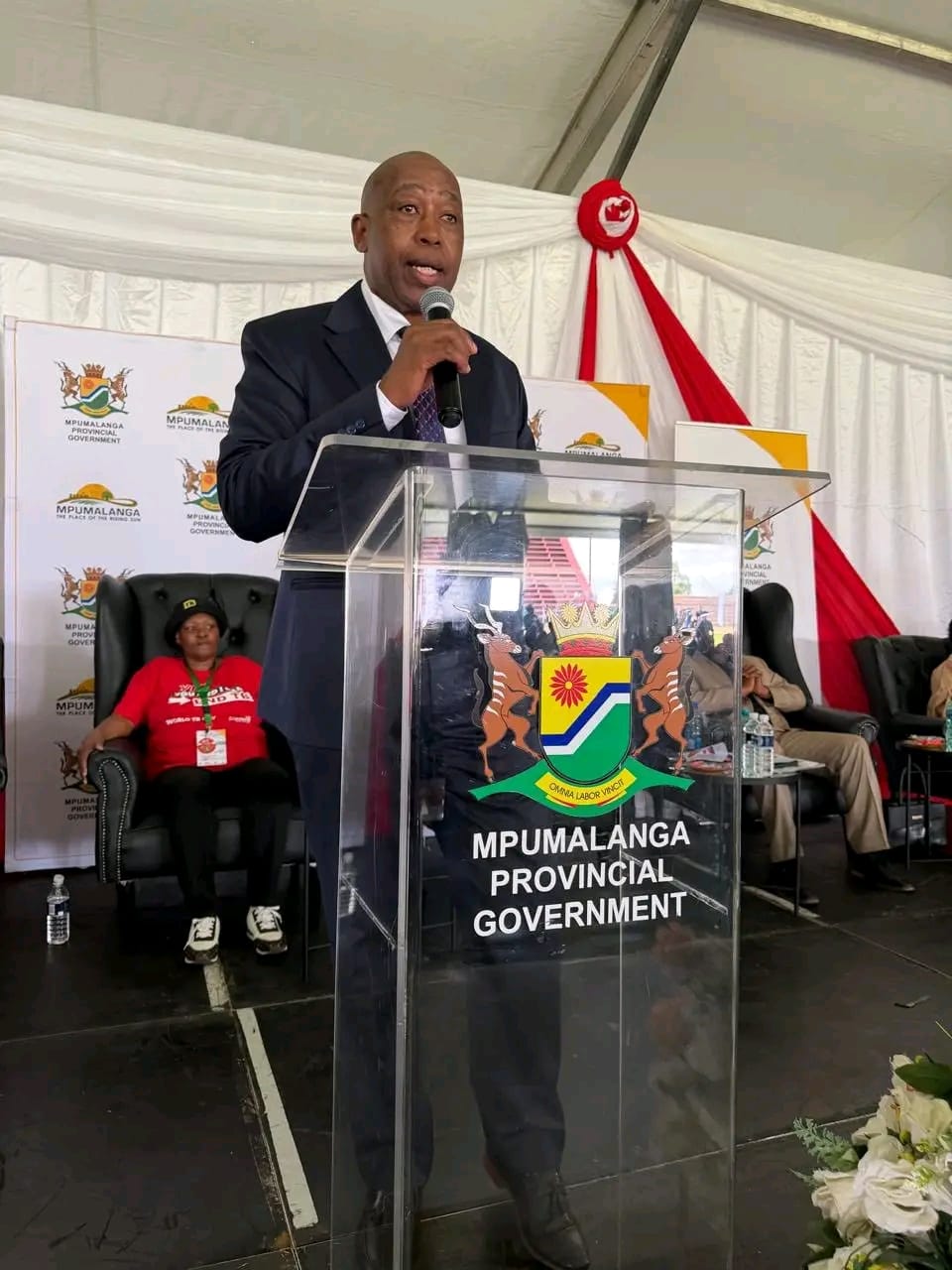
EMALAHLENI — The Mpumalanga Provincial Government reaffirmed its commitment to combating tuberculosis (TB) and
HIV/AIDS during the World TB Day commemoration held on 14 March, 2026, at Sy Mthimunye Stadium in Ackerville.
The event, organised under the theme “Yes! You and I Can End TB,” brought together government leaders, civil society,
healthcare workers and community members in a united effort to address one of South Africa’s most pressing public health
challenges.
Delivering the keynote address, MEC for Co-operative Governance, Human Settlements and Traditional Affairs, Speedy
Mashilo, emphasised that TB remained both preventable and curable, provided patients adhered strictly to treatment.
“Today we [have] gathered not only to commemorate World TB Day, but to reaffirm our collective commitment to ending one of
humanity’s oldest and deadliest diseases,” Mashilo said, adding that TB continued to claim over a million lives globally each
year.
He said that while progress had been made in Mpumalanga through mobile clinics, community health workers and awareness
campaigns, significant challenges remained. These included drug-resistant TB, stigma and poor treatment adherence, which
continued to undermine efforts to eliminate the disease.
Mashilo also called on communities to take personal responsibility in the fight against TB, aligning with the national “Cheka
Impilo” wellness campaign, which encouraged individuals to prioritise their health and undergo regular testing.
According to statistics, South Africa remained among the 30 countries that accounted for 87% of the global TB burden. In 2022
alone, the country recorded approximately 270,000 new TB cases and an estimated 54,000 deaths, highlighting the scale of the
epidemic.
In Mpumalanga, the burden was further intensified by high rates of TB and HIV co-infection, with the province also recording
the highest rate of multi-drug resistant TB (MDR-TB) at 7,8%, exceeding the national average.
The provincial government had identified eMalahleni as one of the highest-burden areas and prioritised targeted interventions.
These included the deployment of mobile clinics to improve access to healthcare services and the rollout of anti-stigma
campaigns aimed at encouraging early testing and treatment.
Mashilo said TB and HIV/AIDS were not only health concerns but also socio-economic challenges that affected communities’
well-being, productivity and development. He noted that poverty remained a key driver of TB infections, creating a cycle where
illness and economic hardship reinforced each other.
The MEC also emphasised the importance of partnerships, calling on government departments, civil society, traditional leaders
and the private sector to work together in strengthening prevention efforts, improving treatment outcomes and ensuring that no
patient was left behind.
In a message of support, traditional health practitioners raised concerns about patients seeking treatment outside formal
healthcare systems. However, they reaffirmed their commitment to referring patients to local clinics for proper diagnosis and
care, strengthening collaboration between traditional and modern healthcare systems.
The commemoration formed part of the broader National TB Strategic Plan, which aimed to test five million people for TB by
March 2026 as part of intensified case-finding efforts. This initiative was expected to significantly reduce TB incidence and
mortality in the coming years.
Closing his address, Mashilo urged communities to reject stigma and discrimination against those living with TB and HIV/AIDS.
“United, we can end TB. When we stand together as a society, we can overcome this disease,” he said.