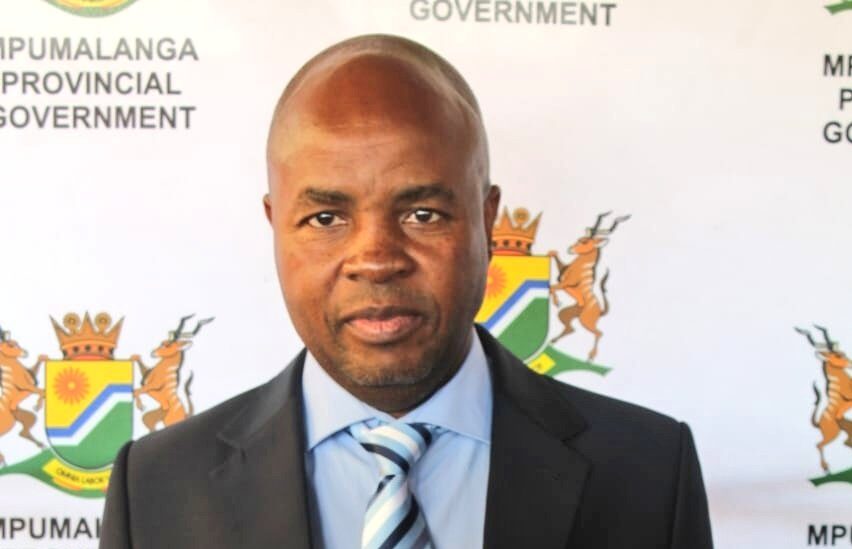
Mbombela — In a Provincial Council on GBVF at Emnotweni Arena, Mpumalanga Premier Mandla Ndlovu declared Gender-Based Violence and Femicide (GBVF) as a “second pandemic”.
Premier Ndlovu addressed a high-level, multi-sectoral gathering that brought together government departments, civil society, traditional leaders and the private sector in the inaugural sitting of the Mpumalanga Provincial Council on Thursday, 06 November 2025.
He called the stakeholders to coordinate efforts and monitor the implementation of national and provincial strategies aimed at combating GBVF.
“Gender-Based Violence and Femicide had been declared by President Cyril Ramaphosa as the second pandemic,” Ndlovu reminded delegates. “We can no longer afford complacency. Every institution represented here must act with urgency to restore dignity, protect the vulnerable and transform our communities.”
The Premier said the Council’s establishment marked a defining moment in Mpumalanga’s response to GBVF, noting that the province needs to move from policy to practice in order to ensure that strategies result in safer communities.
“Gender-Based Violence and Femicide is not a women’s issue, it is a societal crisis,” said Ndlovu. “To defeat it, we must change attitudes, rebuild trust and ensure justice for survivors. The time for fragmented efforts is over; we need a unified front.”
Council member Nomalanga Ngwenya stressed that GBVF must be formally included in government budgets to ensure sustainability. Ngwenya highlighted severe shortages within the health sector, particularly in forensic services, where delays in DNA testing often causes cases to collapse or lose momentum, effectively “working against” victims and investigators alike.
From national strategy to local action
The Premier reaffirmed Mpumalanga’s alignment with the National Strategic Plan on GBVF (2020–2030), which aims at strengthening accountability, prevention, survivor support and the justice system.
He emphasised the importance of community-level structures, including Integrated Rapid Response Teams, which will allow survivors to access immediate help while ensuring perpetrators face swift legal consequences.
“These teams must not only exist on paper,” he said. “They must be functional, visible and trusted by communities, especially in rural areas where women and children often suffer in silence.”
Premier Ndlovu placed South Africa’s struggle against GBVF in a global context, referring to ongoing discussions at the G20 Ministerial Working Group on Women’s Empowerment.
He said South Africa is expected to adopt a Ministerial Declaration on the elimination of GBVF during the upcoming G20 Summit — an outcome that will further guide the country’s response at national and provincial levels.
“Global cooperation reinforces our local action,” Ndlovu said. “What happens in our homes, villages and workplaces defines whether our democracy truly protects all citizens.”
The Premier warned that failure to act decisively on GBVF could weaken social cohesion and undermine public confidence in the state.
Adding to the sense of urgency, recent provincial police crime statistics for the fourth quarter reveal worrying trends. Areas such as Pienaar, Bushbuckridge, KwaMhlanga, Delmas and Barberton are leading in cases of attempted murder, many of which are linked to gender-based violence or domestic disputes.
“These numbers are not just statistics,” the Premier said. “They are a reflection of broken families, communities living in fear and the need for a stronger, coordinated response across all sectors.”
Ndlovu urged every department represented in the council to present clear, measurable programmes of action backed by realistic timelines. “Accountability begins with leadership,” he said. “Every councillor, police officer, social worker and faith leader must play their role. GBVF is not solved by speeches — it is solved by consistency, compassion and commitment.”


