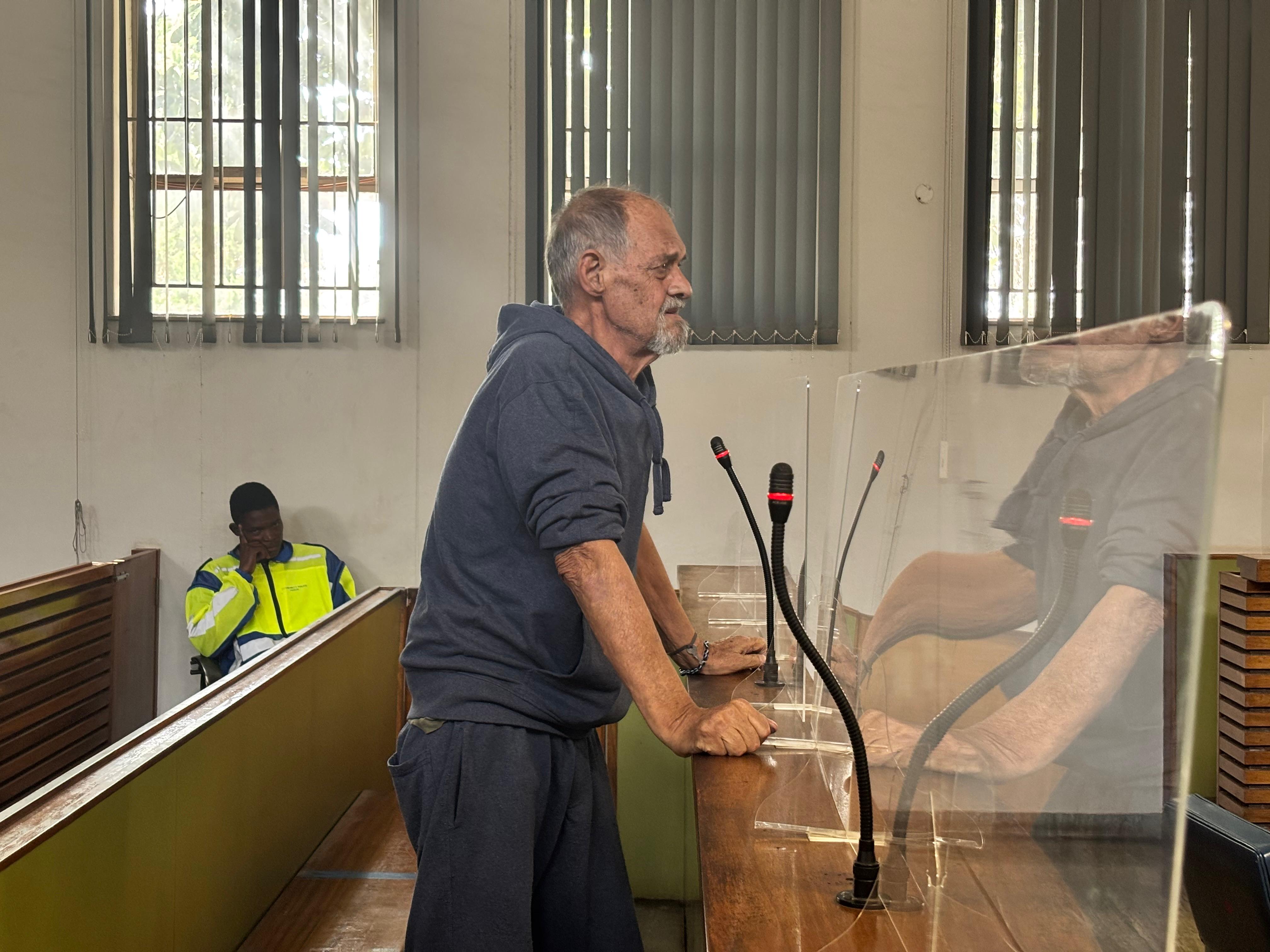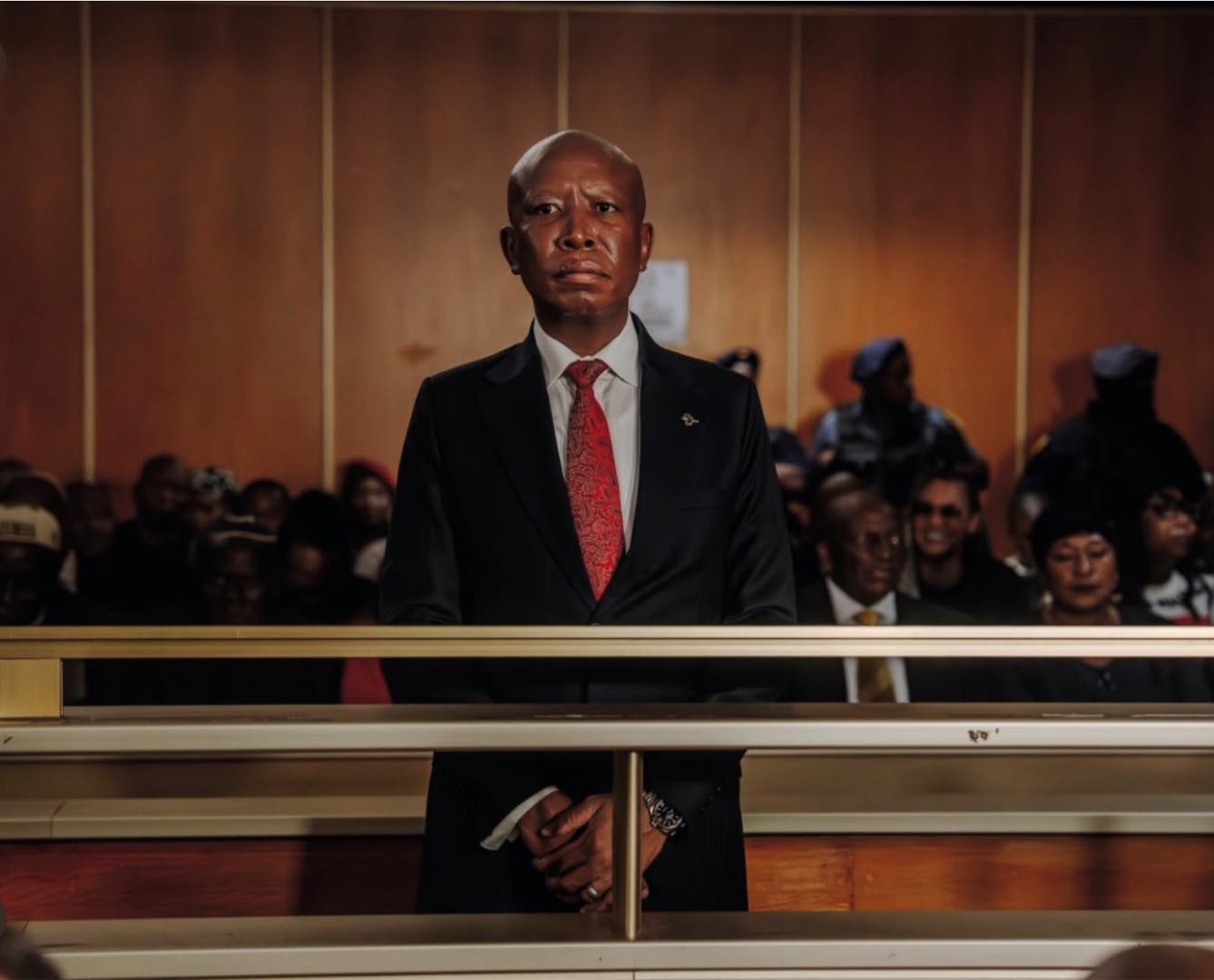
KuGompo — Economic Freedom Fighters (EFF) leader Julius Malema has been granted leave to appeal his sentence, while his application to challenge his conviction has been dismissed by the East London Magistrate’s Court. His legal team acted immediately to avert the possibility of him being sent to jail, as the law dictates once a sentence has been handed down.
Malema was sentenced to five years’ direct imprisonment on Thursday, 16 April 2026, after being found guilty of contravening the Firearms Control Act.
The charges relate to an incident in July 2018, where Malema discharged a rifle during the EFF’s fifth anniversary celebrations in Mdantsane. He was convicted on five counts, including unlawful possession of a firearm and ammunition, discharging a firearm in a public space, and reckless conduct that endangered people or property.
The court imposed a five-year sentence for unlawful possession of a firearm and an additional two years for possession of ammunition. He was also fined R20 000 for the remaining charges or faced an additional six months’ imprisonment.
Magistrate Twanet Olivier denied Malema leave to appeal his conviction but granted leave to appeal the sentence.
Legal expert Jonas Ben Sibanyoni from Sibanyoni (JB) Attorneys said the refusal to grant leave to appeal the conviction suggests the court believes there are no reasonable prospects of success in a higher court.
He explained that Malema still has the option to petition the High Court within 21 days to challenge the conviction.
Sibanyoni added that the granting of leave to appeal the sentence allows Malema to apply for bail pending the outcome of the appeal.
“If the appeal is denied, he will serve the sentence. If a higher court overturns the conviction, he will be released. If unsuccessful, he may approach the Supreme Court of Appeal, and thereafter the Constitutional Court if there are constitutional grounds,” he said.
Mixed reactions from political parties and civil society
The sentencing has sparked mixed reactions from political parties and civil society.
Democratic Alliance (DA) leader Geordin Hill-Lewis welcomed the outcome, saying it reinforces the rule of law.
“Today is a good day for the rule of law in South Africa,” he said, adding that strict consequences for illegal firearm use are necessary to curb gun violence.
The National Prosecuting Authority (NPA) said the sentence reaffirms its commitment to justice without fear or favour.
“The sentence reaffirms our commitment to upholding the rule of law and proper administration of justice, regardless of social status,” said Eastern Cape NPA spokesperson Luxolo Tyali.
Afriforum, which initially laid the criminal charges, also welcomed the judgment.
Chief spokesperson for Community Safety Jacques Broodryk said the reckless discharge of a firearm in a public space posed a serious risk to human life.
“It is important that such behaviour is not normalised or justified under any circumstances,” he said.
However, the EFF has strongly rejected the sentence.
EFF Mpumalanga chairperson Collen Sedibe described the ruling as politically motivated, arguing that Malema was unfairly targeted.
“We anticipated this outcome because the magistrate displayed hostility from the beginning. It is concerning that a case where no one was harmed resulted in a five-year prison sentence without suspension,” he said.
Sedibe further claimed that external influence played a role in the outcome, alleging that the case was driven by political interests.
Malema’s position in Parliament remains safe for now
The case also carries potential implications for Malema’s position in Parliament. In terms of Section 47 of the Constitution, a Member of Parliament is disqualified if convicted of an offence and sentenced to more than 12 months’ imprisonment without the option of a fine. However, such disqualification only takes effect once all appeal processes have been concluded or the time to appeal has expired. This means Malema may remain in office while his appeal is underway. If ultimately unsuccessful, the disqualification would remain in place for five years after the completion of the sentence. Sentences that include the option of a fine do not trigger this provision, but the final outcome of the appeal process will be critical in determining his future in Parliament.